This Sunday, we experience the Winter Solstice. It is not only the longest night of the year in the Northern Hemisphere, but also a major energetic turning point, with more or less noticeable effects on your well-being and health.
Traditional Chinese Medicine (TCM), the root of Shiatsu massage, places great importance on this event and describes the winter solstice as follows: Yin reaches its peak (cold, darkness, rest), but at the very heart of this depth, the small spark of Yang (heat, light, action) begins to grow once more. The reference to the duration of the night is the most obvious to all of us, but it takes several days to truly appreciate the lengthening of the day in the Sky. On Earth, inertia is even greater, and the cold will reign for another month or two. However, the change in course occurs on this very day and influences our energetic state—unless one imagines living separated from the rest of the environment, which is an illusion.
What does this peak of Yin invite us to do?
Introspection and stillness are to be prioritized, to nurture the timid flame deep within us. As the seat of our profound Essence, the Kidney is particularly called upon in winter, as is the Bladder, which is very active. It is important to take care of these two organs. Among the seasonal recommendations:
- Slow down: Less agitation, more introspection. Honor your need for sleep.
- Warm up: Prioritize cooked foods, soups, and mild spices (ginger, cinnamon) to protect your inner fire.
- Work on flexibility: Saving your body does not mean deserting it. Beware of numbness and keep it supple, for example, through Shiatsu massage or self-massage of the feet and hands.
- Preserve your essence: This is the time for regeneration. By conserving your energy now, you prepare your vitality for next spring.
And where does Shiatsu fit in?
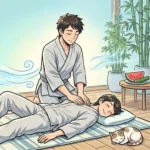
Applied to the acupuncture meridians, Shiatsu produces a powerful harmonizing and balancing effect on energies to accompany the transition of seasons. It is particularly recommended for people experiencing fatigue or seasonal depression, as well as those suffering from physical numbness due to cold or lack of physical activity. This traditional Japanese treatment “warms” and relaxes.
The challenge is not to erase winter and its concentrating effect: it is necessary to prepare for the coming blossoming. Instead, it must be experienced with serenity and relaxation, by nurturing that tiny spark of “Yang”—faint, yet destined to grow until springtime.